Friday, October 29, 2010

Great Literature

I have recently been thinking about some of my favorite books and what really surprised me was that many of the books that came to mind are from the modernism era. I am not sure exactly why that is. I like the books because they are not full of fluffy words but rather each word is chosen carefully and has lots of meaning. I also like them because they are depressing. Not because I think of myself as a depressing person but I like it because it is more realistic. I also enjoying thinking about how glad I am that my life is not like the book I just read.

Here are some of those books:

The Sun Also Rises
Great example of cutting the flowery nothingness out of prose. His writing is direct and to the point so be careful you pay attention or you might miss something

Slaughter House Five
Probably one of the craziest books I have read. It is fun to read even if you can't understand what Kurt Vonnegut is trying to say. 

1984
Note* This book is super depressing. Great book but there is no hope at the end of it. There is not even a martyr. If you like happy endings this might not be the book for you.

Brave New World
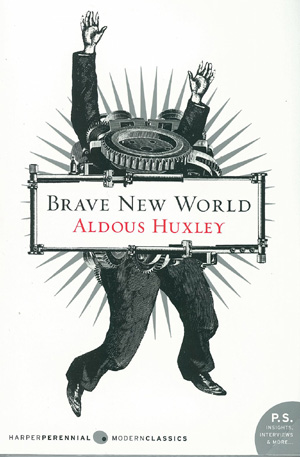
Huxley also wrote The Island. I have only seen the movie version of that book. This book is great if you like science fiction but feel like you should read something with a little more substantial meaning.

One Flew Over the Cuckoo's Nest
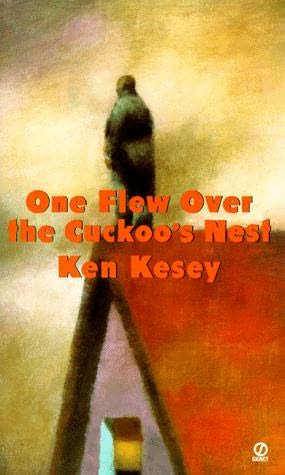
Great book if you like psychology. Shows many of the horrendous things that were done in early psychiatric institutions.

Where the Red Fern Grows
I loved reading this book as a kid. I have read it multiple times and I cried every time.

To Kill a Mockingbird 
Harper Lee's only book. It is a masterpiece. Every American should read this book. I think that most do. The movie is not a good enough substitute. It is not completely true to the book. Notice how they make Miss Atkinson, a white neighbor, the kids' mother figure in the movie where as the in book Calpurnia, their African American cook, is their mother figure.

Great books. What is your favorite literature?

Wednesday, October 27, 2010

Let me step in your shoes.

The phrase to step inside someone else's shoes is commonly understood by most English speakers. It has many different variations but all generally mean to look at something from another person's perspective. In my experience this usually gets brought up in an argument when someone is trying to convince another person that they are right. But my question is how can you be right if it is totally based upon your perspective?

Look at this picture. Do you see a young lady or an old woman? I see a young lady. Does that mean if you see an old woman you are wrong? Maybe, it would probably depend on you perspective.
Bringing perspective into discussions seems to take the absolutes out of the solution. The entire thing becomes more subjective and right or wrong is based off of whether or not your personal perspective aligns with that viewpoint. This is called perspectivism.


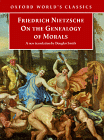
This idea was proposed by Friedrich Nietzsche. He lived in second half of the 19th century and wrote and proposed ideas during the Modernism era. His works cover many topics but some of the most interesting ones are in the field of morality and moral thinking. In his book On the Genealogy of Morals he explores the evolution of morals and proposes ideas of where they came from. He makes the point that moral behavior evolved from certain social situation and that it is impossible to reach any absolute moral truth because a persons morals are based off of their own situation, or in other words their own perspective.

So what do you think? Is truth really just based off someones perspective?

Animated Music

Digital technology creates some pretty incredible possibilities. It allows us to link with one another but it also allows us to link ideas an concepts that were previously separate. One of my favorite is when visuals are linked with music. I do not mean when music is placed over the top of video; I am talking about when visuals are used to add depth to audio. When both are integrated together it is really amazing.

I really think this is just the beginning. There are great things out there that combine ideas and concepts that on the surface are unrelated but when put together make for amazing works of art.

Tuesday, October 26, 2010

A little more ME

So I am going to try to make this blog a little more personal. I am going to continue to blog about things that I learn but I am going to bring more of my personal life into everything. I will try to be careful about whether or not the things I post are relevant to other people. I don't think that me rambling on about personal information that has nothing to do with anyone else is beneficial but I am going to try add more of my personal musing to the blog.


To start off, I would like to point out that I am a Mormon. I have added a widget to the sidebar if you would like to find out more. Also I am going to add a song from the Weeks. My brother Tal showed me this song last week. Its great and the band has many other amazing songs.

Monday, October 18, 2010

Darwin the great Puzzlist

Charles Darwin's book, The Origin of Species, revolutionized the scientific world. His proposed method of evolution, natural selection, is the central point of modern day evolution. It did not start off that way and Darwin was definitely not the first person to propose evolution to explain the huge variety of life on our earth, but he was able to put it all together in one central idea that continues on today. The theory of natural selection and evolution as we know it today was actually the triumph of many years of research and observation by many people all of the globe. There were major and minor players. Some ideas purposed were correct some where wrong but eventually they all helped Darwin reach his conclusion.

Wednesday, October 13, 2010

Oliver Twist and Stephen Colbert

Most of us are familiar with the story of Oliver Twist. A poor orphan boy is passed around from person to person and seems to find himself in the worst situations. Fortunately in the end of the story he ends up happily ever after living with wealthy benefactor, Mr. Brownlow. The story has been retold over the years in almost every media form imagineable, but in many of these reproductions water down or entirely change the purpose of the original novel.

Oliver Twist was written by Charles Dickens in the 1830's during the heart of the industrial revolution in England.  It was written as a political statement against many of the government institutions in place at that time. During the industrial revolution there was a huge influx of people in to large cities and along with that many new social problems. A new middle class of people arose but along with that a very poor population that lived with in these cities. In order to deal with this large group of impoverished people the British government set up institution such as the poorhouses, workhouses, and many other places to house the people that could not make a living in the city. The irony of the entire situation was that these places were often harsher than living on the streets. Many people used them as a means of punishment to punish people for not working. So instead of extending a christian  hand the people running these institutions were corrupt and took advantage of the people they professed to be helping.

Charles Dickens was writing out against this in Oliver Twist. He was protesting the inhumane enviroments maintained in them and showing how the poor people forced to go to such places were humans just like everyone else. He accomplishes most of this through his sarcasm. He points out the corruption in the system through his sarcastic portrayal of these bureaucratic officials. His description of the feeding of the boys in the orphanage is a n excellent portrayal of this in action.
"Sevenpence-halfpenny's worth per week is a good round diet for a child; a great deal may be got for sevenpence-halfpenny, quite enough to overload its stomach, and make it uncomfortable. The elderly female was a woman of wisdom and experience; she knew what was good for children; and she had a very accurate perception of what was good for herself. So, she appropriated the greater part of the weekly stipend to her own use, and consigned the rising parochial generation to even a shorter allowance than was originally provided for them. Thereby finding in the lowest depth a deeper still; and proving herself a very great experimental philosopher." (Oliver Twist, Ch. 2)
The rest of the book goes on in a similar writing style. He effectively uses sarcasm to make his point.


As I was reading  it reminded me of one of my favorite comedian/news reporters, Stephen Colbert. He employs a similar style when he presents his opinions. 

I am not trying to say that Colbert's motives are quite as noble, or that his purpose is as well defined as Dickens, it is merely a good example of how sarcasm is alive and well today.

Monday, October 11, 2010

Dime Novels

I always wanted to be a cowboy growing up. I am not really sure why but something about stories of the wild west caught my attention early on. There is something so luring about riding into the sunset on a noble steed. I think that all of the spaghetti westerns I watched with my dad played a big role in all of it. The tales of the American west colored my childhood dreams.
I think I have found a way to relive some of those early childhood dreams and a possible answer as to why stories of the west play such a prominent role in our national identity. It is the dime novel.

A dime novel is  short publication, roughly 100 pages, that has some story written for entertainment. They are closely related to comic books of our day and TV series. They were popular during the mid-1800's and their popularity extended into the early- 1900's. The format and look of these short novels changed over time but generally they were cheap (5 to 15 cents, usually 10), short, and available to a wide group of people.

We are indebted to these publications for many stories that we think of as classics today. Characters like Buffalo Bill, Jesse James, and many others have been immortalized through dime novel publications. Many detective stories were started through dime novels. I found a great site that contains thousands of dime novels so that anyone can read them. My favorite is a story about Jesse James.

The American West plays a huge role in our national identity. The Greeks and Romans had their epic poems. Homer lives on still. The English have stories of King Author and his round table. The Germans had the Grimm brothers entertaining the youth with stories and we have the wild west. Cowboys and other tales of the west have a huge impact on who we are. For example, stories of the pioneers create a special identity within the LDS community. I love the wild west, and I owe a huge debt to dime novels for perpetuating the stories, even if they are not all true.